Board of Healthcare Funders (BHF)
Designing Structure Within a Complex Healthcare Ecosystem
This was the most challenging task I was part of at E.O.H. As part of the project team, I contributed to the information architecture, wireframing, and user experience planning of the BHF digital platform. The project required organising large volumes of healthcare information into clear structures, intuitive navigation pathways, and scalable digital experiences that could support multiple audiences.
Information Architecture
Content structures
and navigation planning.
UX Planning
User journeys and experience frameworks.
Wireframing
Page structures
and interaction design.
Collaboration
Working alongside project teams and stakeholders.
Understanding the Challenge
The BHF platform serves a diverse range of audiences, including healthcare professionals, medical schemes, healthcare providers, regulators, and members of the public.
Each audience requires access to different information, creating challenges around discoverability, navigation, and content organisation. Ensuring users could quickly find relevant resources while maintaining clarity across a large content ecosystem was a key consideration throughout the project.
The project’s success depended on creating a structure capable of supporting complex content while remaining intuitive and accessible for users.
To address these challenges, the planning process focused on understanding audience needs, organising information into logical hierarchies, and establishing navigation frameworks that could scale alongside the platform’s future growth.
By approaching the project from an information architecture perspective, the team was able to create a foundation that balanced user requirements, business objectives, and long-term content management needs.
Multiple Audience Groups
Large Content Ecosystem
Complex Navigation Requirements
Healthcare Regulatory Information
Long-Term Scalability
Understanding the Audience
Creating an effective healthcare platform required more than organising content—it required understanding the people who would rely on it.
The platform serves multiple audience groups with distinct goals, information needs, and expectations. To create a structure that would remain intuitive and scalable, it was important to identify the primary audiences and understand the types of information they were most likely to access.
By analysing user needs and content requirements, the team was able to establish a foundation for navigation, information architecture, and experience design decisions throughout the project.
The audience groups below represent the primary users considered during the planning process and highlight the different requirements that influenced the platform’s structure.
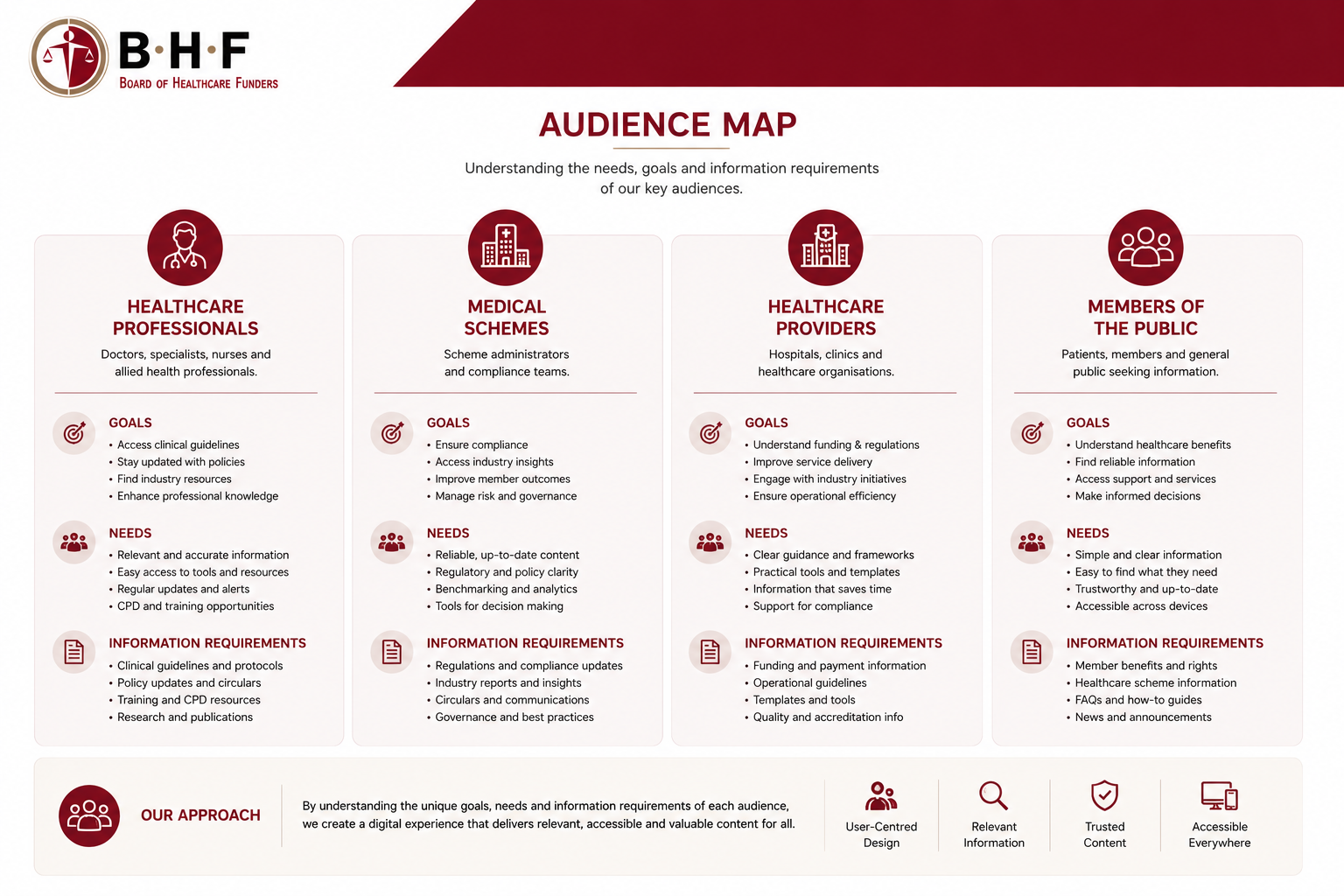
Healthcare Professionals
Seeking clinical resources, guidelines, and industry updates.
Medical Schemes
Managing compliance, governance, and member-related information.
Healthcare Providers
Accessing operational resources, policies, and industry support.
Members of the Public
Finding healthcare information, guidance, and member resources.
Mapping the User Ecosystem
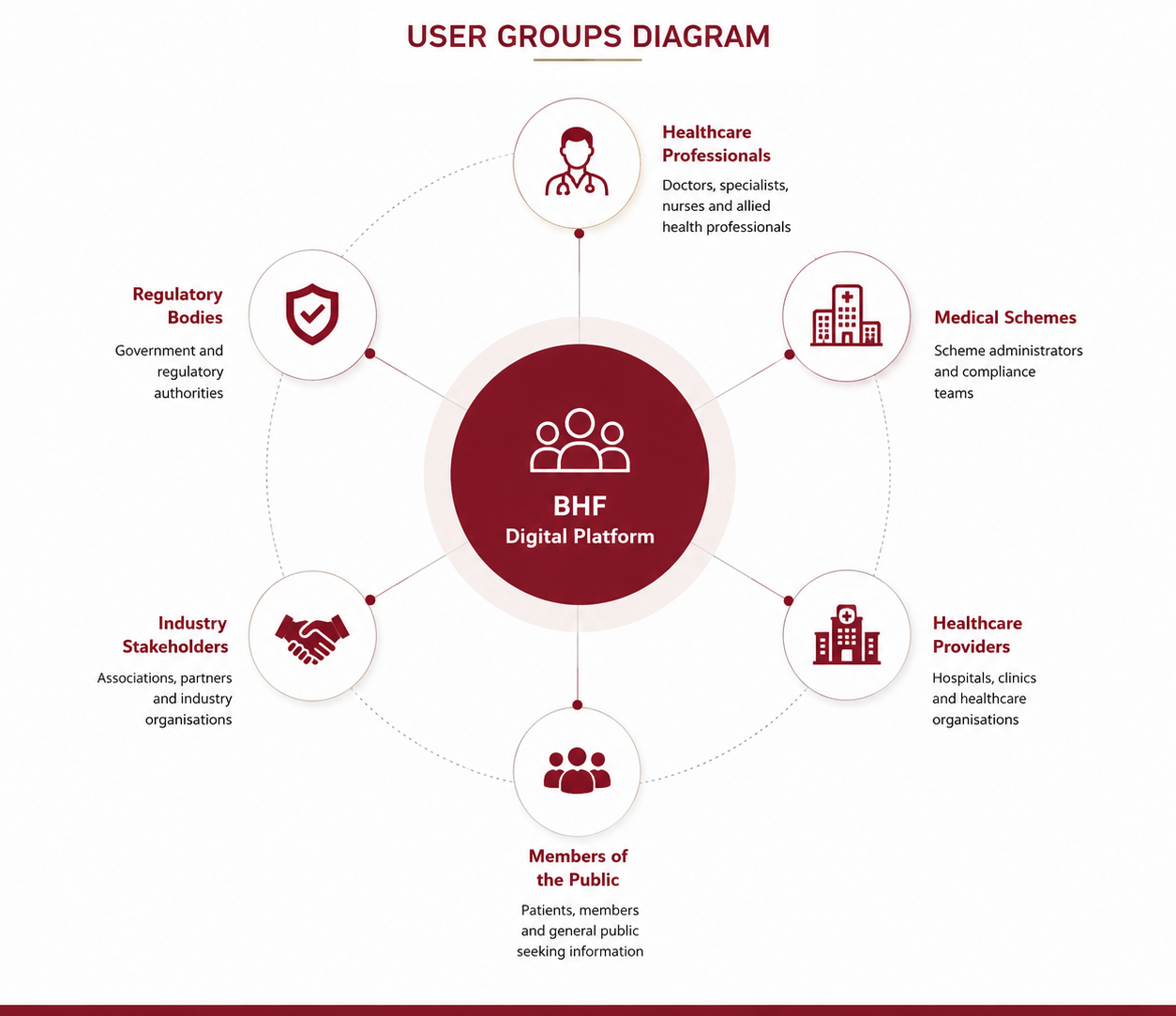
With a clear understanding of the platform’s primary audiences, the next step was to examine how these groups interacted with the broader digital ecosystem.
Each audience engages with the platform for different reasons, accesses different content, and follows unique pathways to achieve their goals. Understanding these relationships helped inform navigation structures, content organisation, and information architecture decisions throughout the project.
By mapping the ecosystem surrounding the platform, it became easier to identify key content relationships, prioritise user needs, and create a structure capable of supporting multiple audience journeys within a single digital experience.
Understanding the relationship between users, content, and platform objectives helped establish a foundation for navigation planning and information architecture decisions.
User-Centred Structure
audience needs.
Content Relationships
information pathways.
Experience Planning
within a unified platform.
Scalable Framework
Accommodating diverse audiences without increasing complexity.
Solving Content Complexity
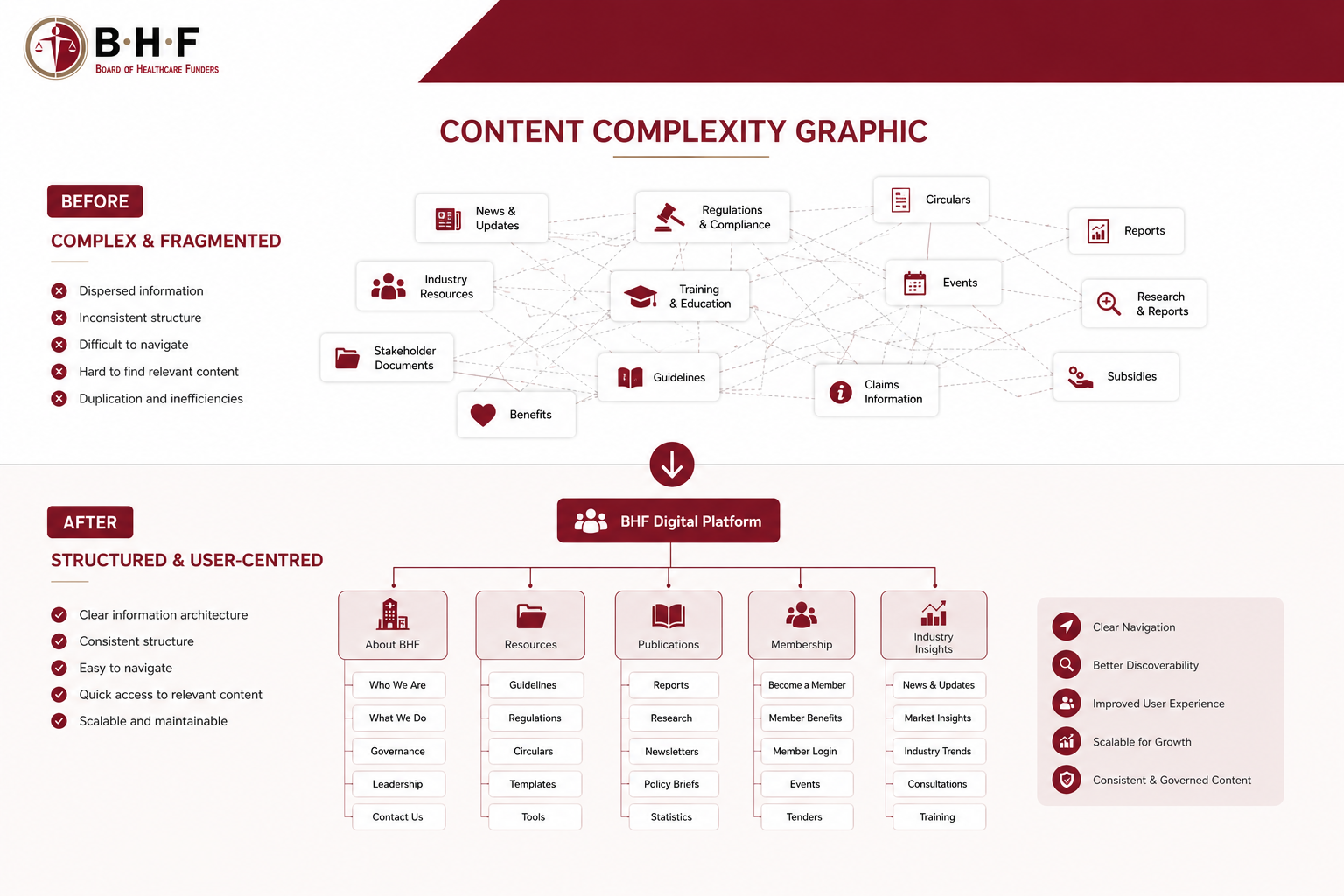
One of the project’s primary challenges was managing a large and diverse body of healthcare-related content while maintaining a clear and intuitive user experience since information was spread across numerous categories, resources, publications, regulatory documents, and stakeholder-specific content areas. Without a well-defined structure, users could easily become overwhelmed or struggle to locate relevant information.
To address this challenge, the focus shifted towards organising content into logical groupings, establishing clearer navigation pathways, and creating a scalable information architecture that could support both current and future content requirements.
Improved Discoverability
more efficiently.
Clearer Navigation
logical pathways.
Structured Content
meaningful categories.
Scalable Architecture
Supporting future growth without disrupting usability.
Information Architecture & Framework
The next step involved translating those insights into a scalable information architecture and I helped define content hierarchies, navigation structures, page relationships, and user pathways that would support main objectives which was to create a framework that could accommodate multiple content types, audience groups, and future platform growth while maintaining a consistent and intuitive user experience.
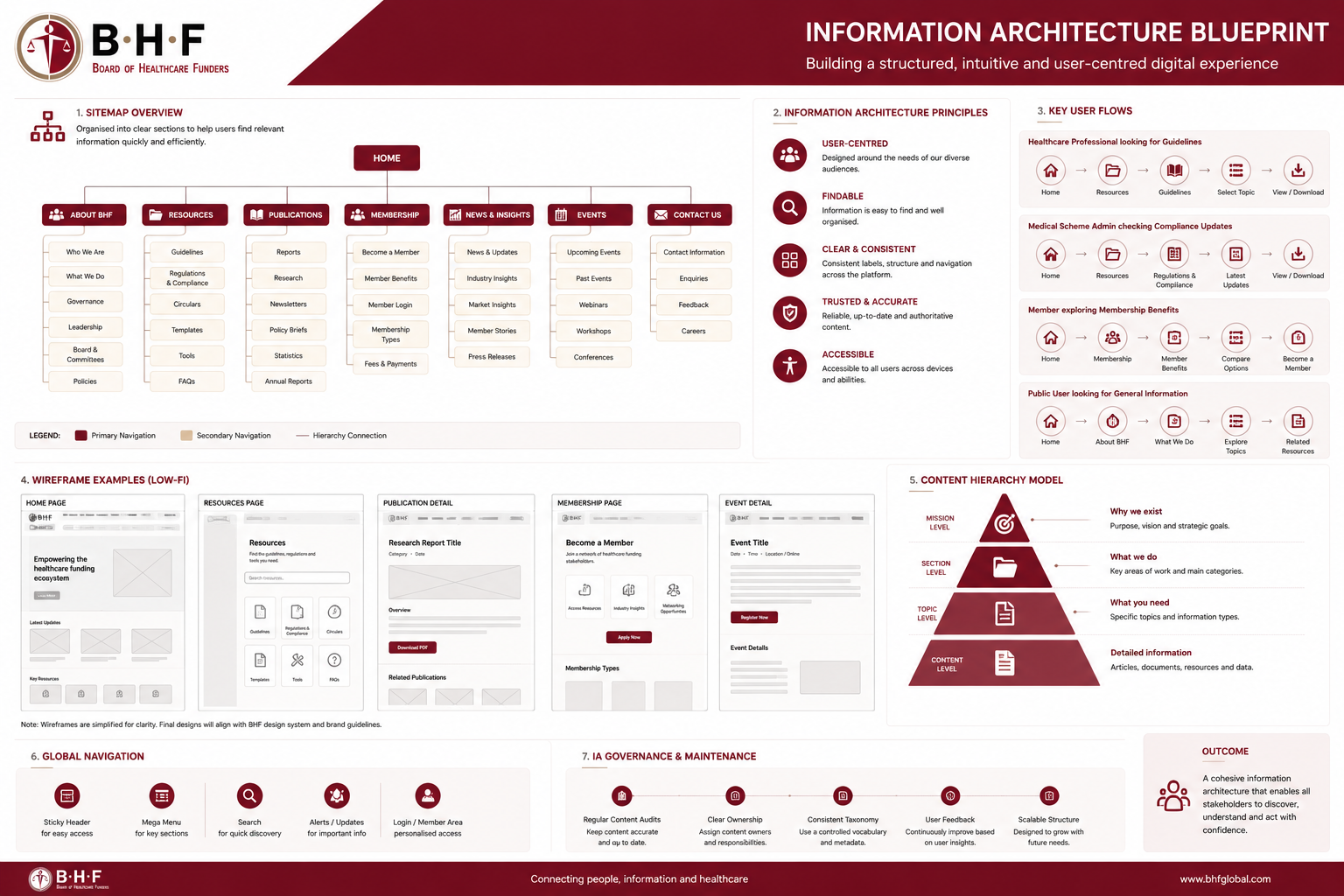
By establishing a clear information architecture early in the project, the team was able to create a shared framework that guided design, content, and implementation decisions throughout the platform’s development.
Wireframing & Experience Design
Following the information architecture phase, the next step involved translating structural concepts into practical user experiences.
You can download the complete file from the button below.